
Asia’s outdoor LED market is shifting to ultra‑bright, energy‑aware installations with strong local tailoring. Cities favor programmable façades and modular stadium wraps that lift visitation and engagement by double digits in pilots. Sensor‑driven dimming, spectral limits and curfew scheduling cut glare and emissions while meeting local regulation. 5G and edge AI enable real‑time personalization LED video wall, geo‑fencing and measurable attribution. Operators pair regional controls with local teams to scale safely — continue for specifics on deployment, KPIs and compliance.
Urban Facades and Retail Experiences
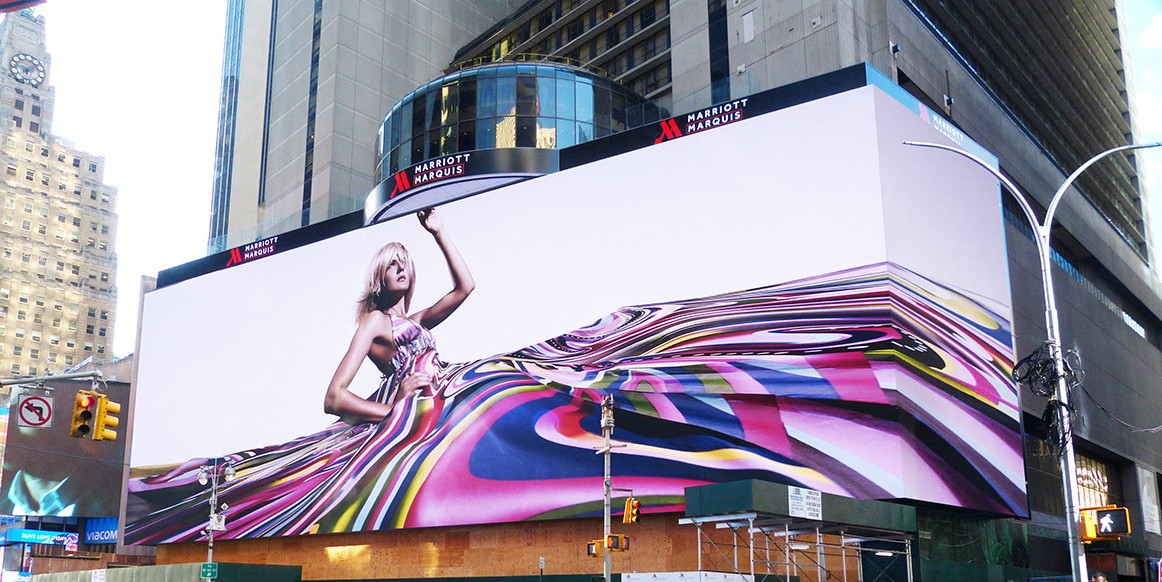
Against a backdrop of accelerating urbanization and rising disposable incomes across Asia, outdoor LED façades have become measurable drivers of retail footfall and brand recall. Analysts note a 12–18% uplift in visitation where programmable façades replace static signage, with interactive storefronts converting casual passersby into engaged prospects through gesture, touch and mobile sync digital LED sign board. Markets from Seoul to Jakarta balance innovation with conservation by integrating LEDs into heritage facades, using reversible mounting and color-temperature controls to respect materiality and regulation. Strategically, operators prioritize modular panels for rapid content refresh, daylight-adaptive luminance for energy efficiency, and privacy-safe data capture to retain consumer trust. The region-savvy conclusion: scalable, context-aware LED façades expand retail reach while preserving urban character.
Stadiums, Events and Large-Format Installations
Stadium and event installations in Asia prioritize extreme-brightness visibility to overcome daylight glare and large viewing distances, with luminance specifications often exceeding 5,000 nits for outdoor bowl environments. Modular stadium wraps are increasingly adopted for rapid deployment and cost-effective scaling, allowing stadium owners to reconfigure footprints for seasonal sports and concert schedules. Integrated event-driven content systems — combining real-time data feeds, sponsor playlists, and crowd-engagement metrics — are driving measurable revenue uplifts and operational efficiencies.
Extreme-Brightness Visibility
When lighting conditions fluctuate from midday glare to floodlit night games, outdoor LED displays in Asia designed for extreme-brightness visibility must deliver consistent luminance, high contrast ratios, and rapid adaptive dimming to maintain legibility across distances exceeding 100 meters. Data shows peak-site luminance often exceeds 8,000 cd/m², requiring ultra bright calibration and proactive glare mitigation to protect viewer comfort and broadcast clarity. Strategic deployment favors sensor-driven feedback, regional daylight models, and redundancy for high-stakes events. Advantages include broadened viewing envelopes and resilient branding during variable weather.
- Sensor-led adaptive dimming for real-time luminance control
- High-contrast panels with HDR processing
- Thermal management to sustain peak output
- Redundant power and signal paths for uptime
- Regional tuning based on solar exposure maps
Modular Stadium Wraps
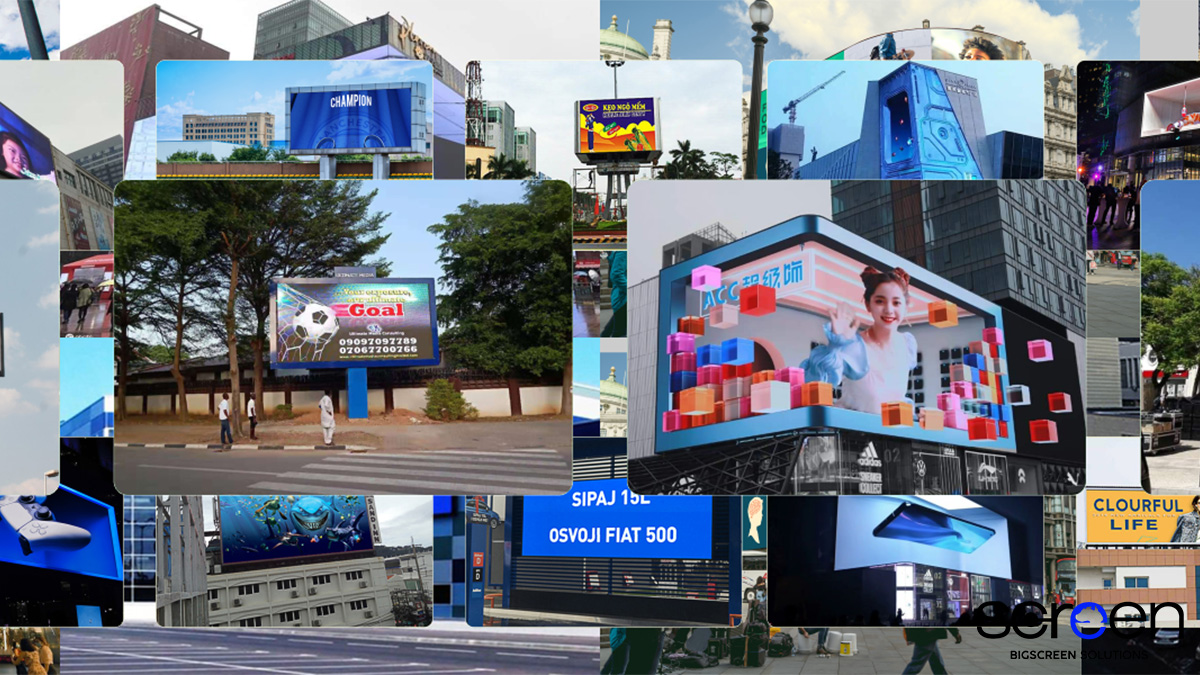
Building on strategies for extreme-brightness visibility, modular stadium wraps offer scalable, high-impact LED coverage that balances viewing geometry, structural constraints, and event-specific messaging across Asian venues. Analysts note modular branding yields 30–60% faster installation cycles versus bespoke systems, enabling venues to reconfigure face sizes for seasonal demand. Data from recent projects in Southeast Asia show payload, wind-load, and sightline calculations reduce downtime by 18% when integrated early in procurement. Strategic deployment prioritizes modularity to maximize sponsor ROI while preserving architectural integrity. Wrap logistics focus on transportable cabinet units, standardized mounting interfaces, and rapid-swap control nodes to support quick-turn programs. The approach frees operators to iterate creative programs responsively, aligning capital efficiency with audience reach targets across diverse markets.
Event-Driven Content Systems
Optimize content workflows around event cadence to maximize audience engagement and operational efficiency across Asian large-format venues. The sector prioritizes data-led, schedule aware creatives and event triggered storytelling to align messaging with match schedules, festivals and transit peaks. Systems integrate APIs, audience metrics and rights management to automate playback, reduce manual overrides and enable local relevancy.
- Real-time triggers: ticket scans, score updates, transit arrivals
- Geo-fenced offers: localized promotions during events
- Content versioning: language and cultural variants by market
- Compliance layer: advertising and public-safety constraints
- Performance analytics: dwell time, recall and conversion
Operators benefit from modular platforms that respect creative freedom while enforcing governance, enabling scalable, measurable campaigns across urban and stadium landscapes.
Energy Efficiency and Sustainability Innovations
In recent years, outdoor LED display deployments across Asia have reduced energy consumption per screened square meter by up to 40% through advances in driver efficiency, localized dimming algorithms, and adoption of higher-efficiency diode chemistries. The market response emphasizes low power drivers and adaptive control systems that cut peak loads during off-peak hours, delivering measurable operational savings for operators seeking autonomy over utility costs. Strategic pilots in metropolitan corridors report 25–35% lifetime CO2 reductions when combined with smart scheduling and grid-aware brightness profiles. Policy and procurement increasingly reference recyclability standards and end-of-life takeback schemes, encouraging modular designs and certified materials. Investors and planners focused on scalability value these innovations for lowering total cost of ownership while preserving deployment flexibility.
Weatherproofing, Durability and Maintenance Trends
While coastal humidity and monsoon seasons have driven manufacturers to standardize IP66–IP68 enclosures and conformal-coated PCBs across Asia’s major corridors, deployments now pair those baselines with targeted materials and service strategies tailored to local climates. Data shows uptime gains when suppliers combine corrosion resistant coatings with sealed connectors and elevated mounting to reduce salt spray and flooding exposure. Maintenance regimes shift from fixed schedules to condition-based checks, enabling cost-efficient interventions. Operators favor modular panels for rapid field swaps and longer MTBF components sourced regionally.
- Standardized IP ratings plus corrosion resistant coatings for coastal sites
- Elevated mounts and drainage design in flood-prone zones
- Modular panels to minimize downtime and logistics
- Condition-based inspections and predictive maintenance analytics
- Localized spare networks and technician training
AI, 5G and Smarter Content Management
Regional operators are piloting AI-driven content personalization on outdoor LED networks, with early trials reporting engagement uplifts of 15–40% by matching creatives to time, location and audience demographics. Concurrent rollout of 5G infrastructure across major Asian metros enables low-latency, high-bandwidth feeds that support real-time updates and synchronized multi-screen campaigns. Strategically, combining AI insights with 5G connectivity allows advertisers and city planners to optimize content delivery, reduce manual scheduling and measure performance at scale.
Ai-Driven Content Personalization
Leveraging AI models and 5G connectivity, outdoor LED networks across Asia are shifting from static playlists to real-time, audience-aware content delivery that increases engagement and campaign efficiency. AI-driven personalization enables Behavioral Targeting and Predictive Scheduling to optimize impressions by demographic, time, and location, freeing operators to scale campaigns with precision. Data pipelines fuse anonymized mobile, footfall, and transactional signals to inform creative selection and budget allocation. Measurable lifts in recall and conversion justify higher CPMs while preserving user autonomy through opt-out mechanisms. Strategic deployments prioritize high-traffic corridors and mixed-use precincts where return on attention is provable.
- Dynamic creative optimization by segment
- Context-aware offers during events
- Cross-screen attribution models
- Automated A/B testing loops
- Privacy-first data governance
5g-Enabled Real-Time Updates
By combining edge AI with 5G low-latency links and centralized content orchestration, g-enabled real-time updates transform outdoor LED networks into responsive, data-informed canvases that adapt within seconds to audience signals and operational constraints. Operators deploy 5G dashboards to monitor throughput, latency and ROI metrics across city clusters, enabling rapid redistribution of creative assets based on footfall, weather and transit data. Edge inference reduces bandwidth while enabling sensor triggered alerts to pause, switch or personalize content for safety, compliance or revenue optimization. In Asia’s fragmented regulatory and urban fabric, this approach balances autonomy with control: local teams retain freedom to tailor executions while regional controllers enforce brand, legal and performance guardrails. Measured pilots report 20–40% uplift in engagement and clearer attribution.
Regulation, Light Pollution and Community Response
Against a backdrop of rapid urban LED deployment, policymakers across Asia confront a complex trade-off between commercial visibility and night-sky stewardship. Authorities rely on quantified measurements—lux levels, spectral composition, and spatial dispersion—to set limits that balance economic vitality with public health. Community engagement and curfew policies appear repeatedly in regulatory frameworks, often informed by local survey data and complaints trends. Strategic approaches favor adaptable standards, enforcement metrics, and transparent reporting.
- Targeted lux thresholds for mixed-use zones
- Time-based curfew policies for billboard dimming
- Mandated spectral limits to reduce blue light
- Community engagement forums and complaint portals
- Data-driven enforcement with geolocated audits
Regulatory design emphasizes freedom of enterprise while protecting residents’ nocturnal environment.
Localized Content Strategies and Cultural Adaptation
Following regulatory frameworks that balance visibility and night-time stewardship, content strategists must align creative choices with localized cultural norms and audience metrics to maximize engagement without provoking community backlash. Data-driven segmentation informs language tailoring by region, age cohort and device behavior, increasing recall while respecting linguistic plurality across urban centers. Scheduling algorithms prioritize cultural holidays and civic observances to boost relevance and avoid tone-deaf placements. Performance KPIs—dwell time, CTR, sentiment—are benchmarked against regional baselines to iterate messaging quickly. Creative templates incorporate modular assets for rapid localization, legal flags and brightness profiles to guarantee compliance. Strategic partnerships with local cultural advisors and media owners preserve brand freedom while minimizing regulatory risk and sustaining long-term audience trust.
Frequently Asked Questions
How Do Supply Chain Constraints Affect LED Panel Availability and Lead Times?
Supply chain constraints shorten availability and extend lead times: supply volatility and capacity bottlenecks force prioritization, regional sourcing shifts, and buffer inventory strategies. Data-driven planners exploit diversification and flexible contracts to preserve procurement freedom.
What Are Typical Costs for Leasing Outdoor LED Displays in Asian Cities?
Typical leasing ranges from $500–$8,000 monthly depending on size, location, and duration; rental pricing aligns with market benchmarks per city (tiered rates), enabling strategic, data-driven choices for flexible, freedom-seeking operators.
Can Outdoor LEDS Be Recycled at End-Of-Life, and How Is E-Waste Handled?
Yes. He notes outdoor LEDs are recyclable but require structured recycling logistics; modules, metals, and hazardous components like solder, phosphors, and batteries must be separated. Regionally, formal e-waste streams, regulation compliance, and refurbishment maximize material recovery.
How Do Outdoor LED Displays Impact Property Insurance and Liability?
Outdoor LED displays increase insurance exposure through higher replacement, fire, and public liability risks; insurers demand risk assessments. Data-driven operators pursue liability mitigation via standardized installations, maintenance logs, compliance certificates, and regional insurer engagement for policy customization.
What Skills Are Needed Locally to Program and Operate Large LED Systems?
Technicians require programming, network and hardware diagnostics, plus software integration expertise; content managers need content strategy, UX design, scheduling and analytics skills. Region-savvy operators add regulatory knowledge, multilingual communication and strategic problem-solving for operational freedom.
Conclusion
Across Asia, outdoor LED deployment is accelerating along measurable vectors: urban retail facades, stadium-scale canvases, and localized content ecosystems. Energy-efficient modules, advanced weatherproofing, and AI-5G orchestration are driving operational ROI and reduced emissions. Governance on light pollution and community engagement is shaping installation density and design choices. Region-specific regulation, cultural adaptation, and lifecycle maintenance metrics will determine which markets scale rapidly versus those prioritizing cautious, sustainable rollouts. Tactical investments align with clear performance indicators.